info@escondidotravels.com.au




Jaipur, known affectionately as the Pink City, stands as the vibrant capital of Rajasthan and ranks among India's top destinations, particularly featured in Rajasthan tour packages. Drawing visitors from across the globe, Jaipur is celebrated for its magnificent palaces, imposing forts, historic havelis, splendid temples, and bustling markets. It is also a repository of rich history and cultural heritage, with its forts showcasing the grand architecture and storied past of the Rajput rulers. For those seeking to experience Jaipur's splendor in a short visit, we have designed a concise 2-day itinerary highlighting the city's essential attractions.
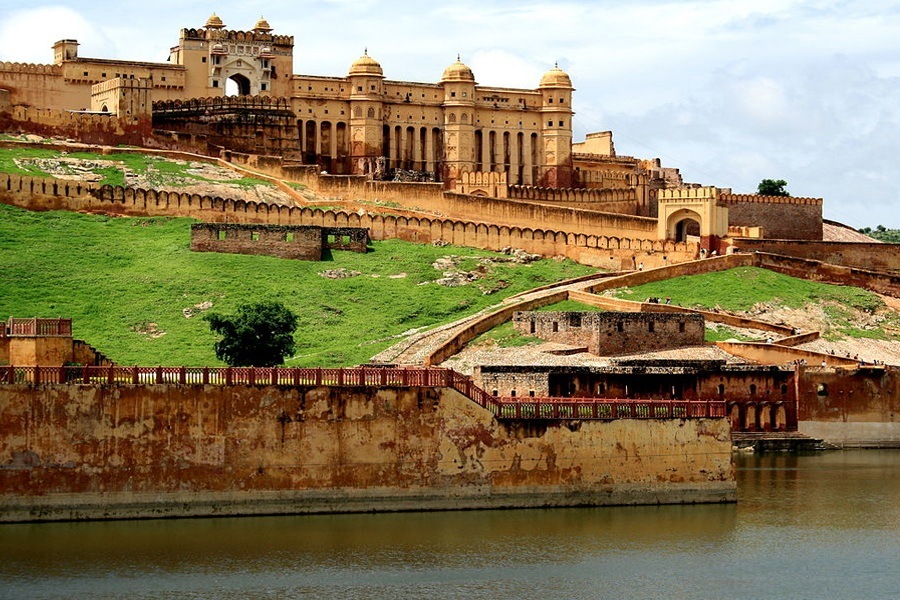
Amer Fort, also known as Amber Fort, majestically sits atop the Aravali Hills and is celebrated as one of the best-preserved forts in Rajasthan, making it a must-visit destination in Jaipur. Built in 1592 AD by Maharaja Man Singh of the Kachwaha Rajput dynasty, the fort was constructed on the remnants of an older structure and later expanded by his successors. This remarkable fort has earned a UNESCO World Heritage Site designation and is part of the Hill Forts of Rajasthan group. Overlooking the tranquil Maota Lake, Amer Fort is crafted from red sandstone and features a fusion of Hindu and Muslim architectural styles. Key attractions within the fort include Jaleb Chowk, Diwan-e-Khas, Diwan-i-Aam, Mughal Gardens, Sukh Niwas, and Sheesh Mahal. The walls of the fort are adorned with intricate paintings and carvings, enriched with precious stones, making it an essential stop on any Jaipur tour.
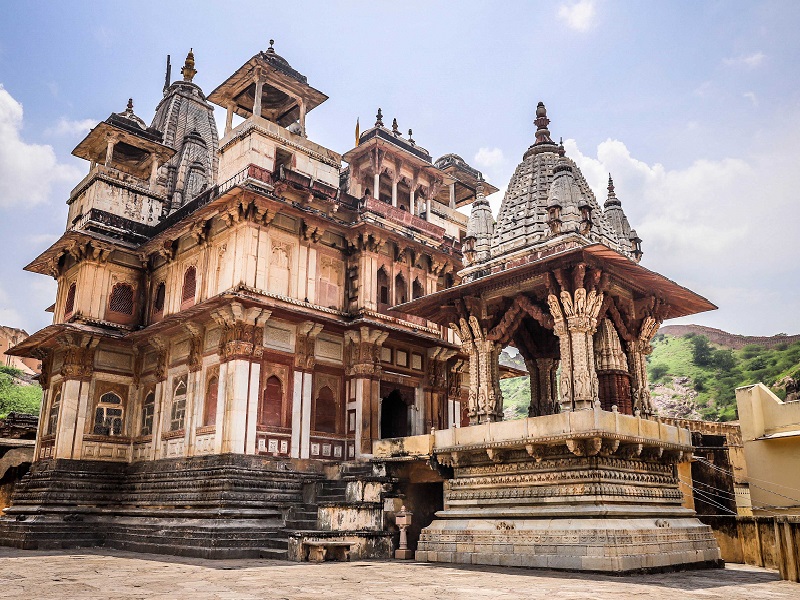
The Srijagat Shiromani Temple, an ancient and enchanting site located in the rear premises of Amer Fort in Jaipur, is one of the most beautiful places to visit near Delhi. Dedicated to Lord Krishna and his ardent devotee Meera Bai, the temple was built between 1599 and 1608 AD by Queen Kanakwati, the wife of King Man Singh I, in honor of her son, Jagat Singh. Legend has it that the statue of Lord Krishna enshrined here is the very one Meera Bai worshipped in Mewar. The temple showcases the Nagara architectural style, with a sanctum, vestibule, and mandapa. Its entrance is graced by a stunning marble archway, intricately carved with images of elephants. The Srijagat Shiromani Temple is a must-visit on any Jaipur tour from Delhi.
Standing tall in the middle of the serene Man Sagar Lake, Jal Mahal, also known as the Water Palace, was constructed in the 18th century by Sawai Madho Singh I as a summer retreat in Jaipur, one of the notable tourist places near Udaipur. The palace underwent renovations and expansions in the 18th century under the guidance of Madho Singh II. It is regarded as an architectural masterpiece, showcasing a blend of Rajput and Mughal architectural styles. Visitors can enjoy a stunning view of the lake from the Man Sagar Dam, framed by the picturesque Nahargarh hills. Constructed from red sandstone, the palace consists of five stories, four of which are submerged when the lake reaches full capacity, leaving only the top floor visible. The palace is particularly enchanting in the evenings when it is illuminated by floodlights.
The Garh Ganesh Temple stands as one of the most ancient and renowned temples in Jaipur. This sacred site, dedicated to Lord Ganesh, was constructed by Maharaja Sawai Jai Singh I during the Ashwamedha Yagna, before the founding of Jaipur, making it one of the prominent places to visit near Agra. The Maharaja arranged for the statue to be positioned in such a manner that it could be viewed from the Chandra Mahal of the City Palace in Jaipur using binoculars. In this temple, Lord Ganesha is revered in the form of a child known as ‘Vigra Purusha Kriti,’ notably depicted without a trunk. Nestled amidst tranquil hills and lush greenery, visitors can access the temple by ascending a staircase of over 300 steps.
Constructed in 1732 by Maharaja Sawai Jai Singh II, the City Palace stands as one of India’s most esteemed palaces and is a prominent tourist attraction in Jaipur tour from Udaipur. This expansive palace showcases a blend of European, Rajput, and Mughal architectural styles, covering a significant portion of the walled city, specifically one-seventh of its area. The complex is adorned with various gardens, temples, and pavilions. Notable structures within the City Palace complex include Chandra Mahal, Maharani’s Palace, Mubarak Mahal, Shri Govind Dev Temple, Diwan-i-Aam, and Diwan-E-Khas. Currently, the majority of the palace serves as the residence for the descendants of Jaipur’s former rulers, making it one of the key heritage sites near Delhi. Visitors are permitted only on the ground floor, which houses the Maharaja Sawai Man Singh II Museum, featuring an array of carpets, manuscripts, and other artifacts belonging to the royal family.
Birla Mandir, also known as the Laxmi Narayan Temple, is a prominent Hindu temple situated at the foot of Moti Dongri Hill in Jaipur, among the top places to visit in Rajasthan. Constructed in 1988 by the Birla family, this exquisite temple is a significant landmark in Jaipur. Crafted from white marble, Birla Temple is dedicated to Lord Vishnu (Narayan) and his consort, Lakshmi. The temple’s walls are adorned with intricate carvings of Hindu symbols and ancient verses from the Geeta. It presents a breathtaking sight when illuminated at night.
The illustrious Hawa Mahal, also known as the Palace of Winds, was erected in 1799 under the patronage of Maharaja Sawai Pratap Singh as an extension of the magnificent City Palace. This palace stands as a significant landmark in Jaipur and is an essential inclusion in Jaipur 3-day tour packages. The design of the palace is attributed to the architect Lal Chand Ustad, and it is said to be inspired by the crown of Lord Krishna. Constructed from exquisite red and pink sandstone, the structure resembles a five-storey pyramid. Its distinctive façade features 953 small windows, referred to as jharokhas, which are adorned with intricate latticework. This lattice was originally intended to enable royal women to observe the daily activities on the streets below without being seen. The interior of the palace exudes elegance, and access to the upper levels is provided by narrow ramps, as there are no stairs within the Hawa Mahal, Jaipur, among the premier heritage sites near Udaipur.
© 2024 Escondido Travels. All rights reserved. Designed & Developed By Swastik Web Technology
Escondido Travels